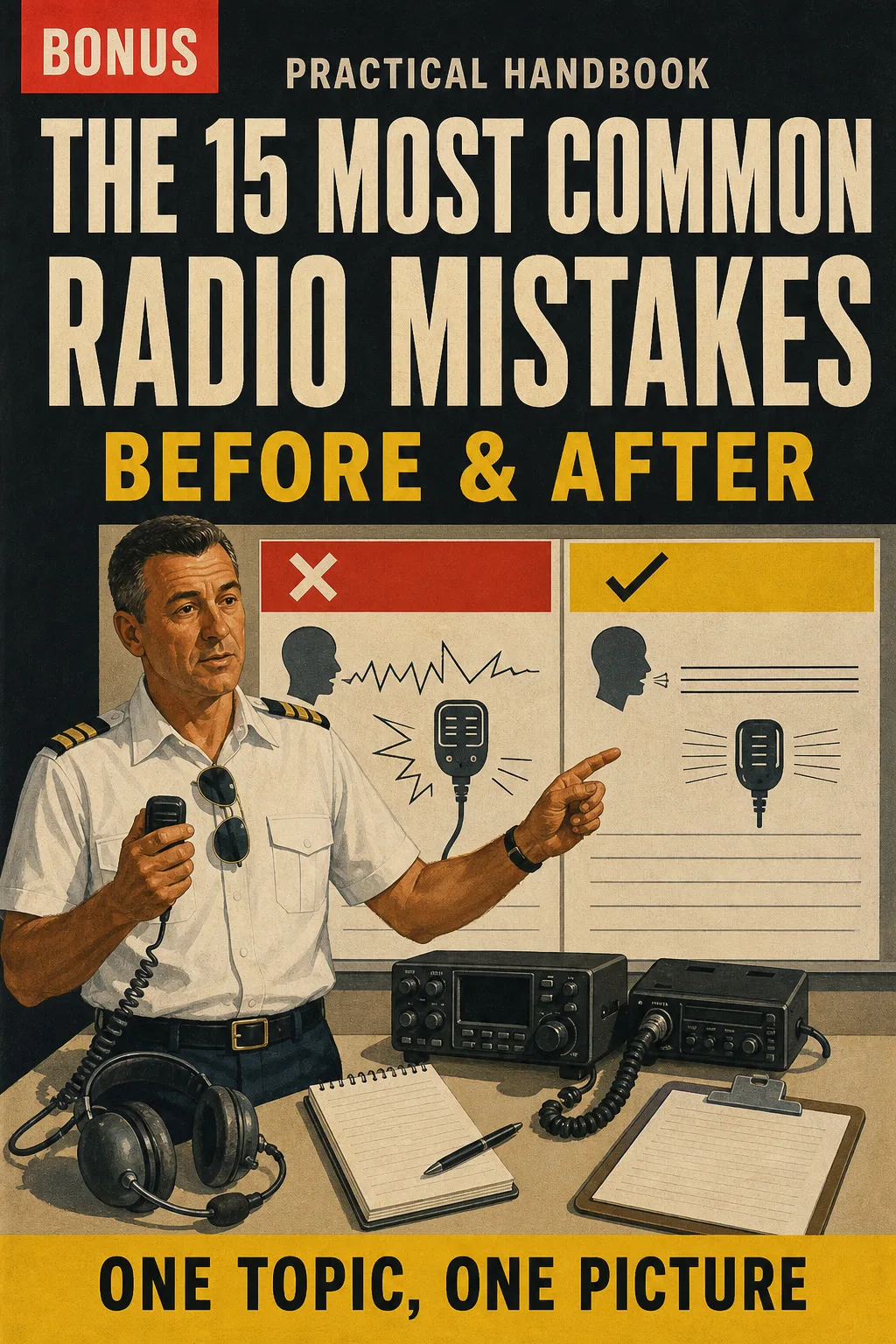
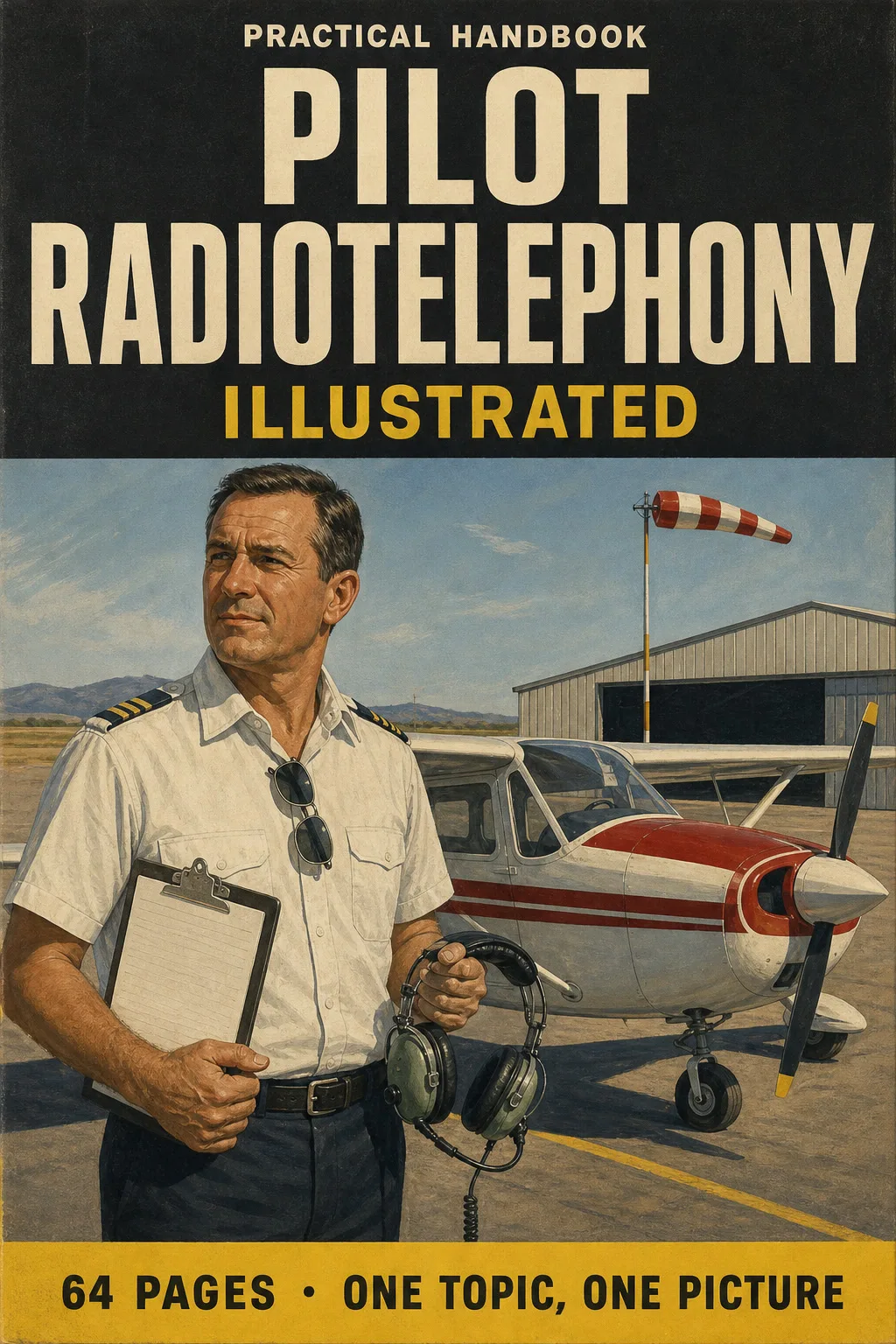
📄 Digital book in PDF · read it on your phone or print it
The phonetic alphabet, the four-step call, read-backs, taxi and take-off, circuit calls, blind calls, QNH, the transponder, MAYDAY and PAN PAN, with South African examples: ZS call signs, QNH in hectopascals, unmanned aerodromes. Every topic has its own page: the drawing first, then what you need to remember. 64 illustrated pages.
🔒 Secure checkout · PDF by email · 30-day guarantee
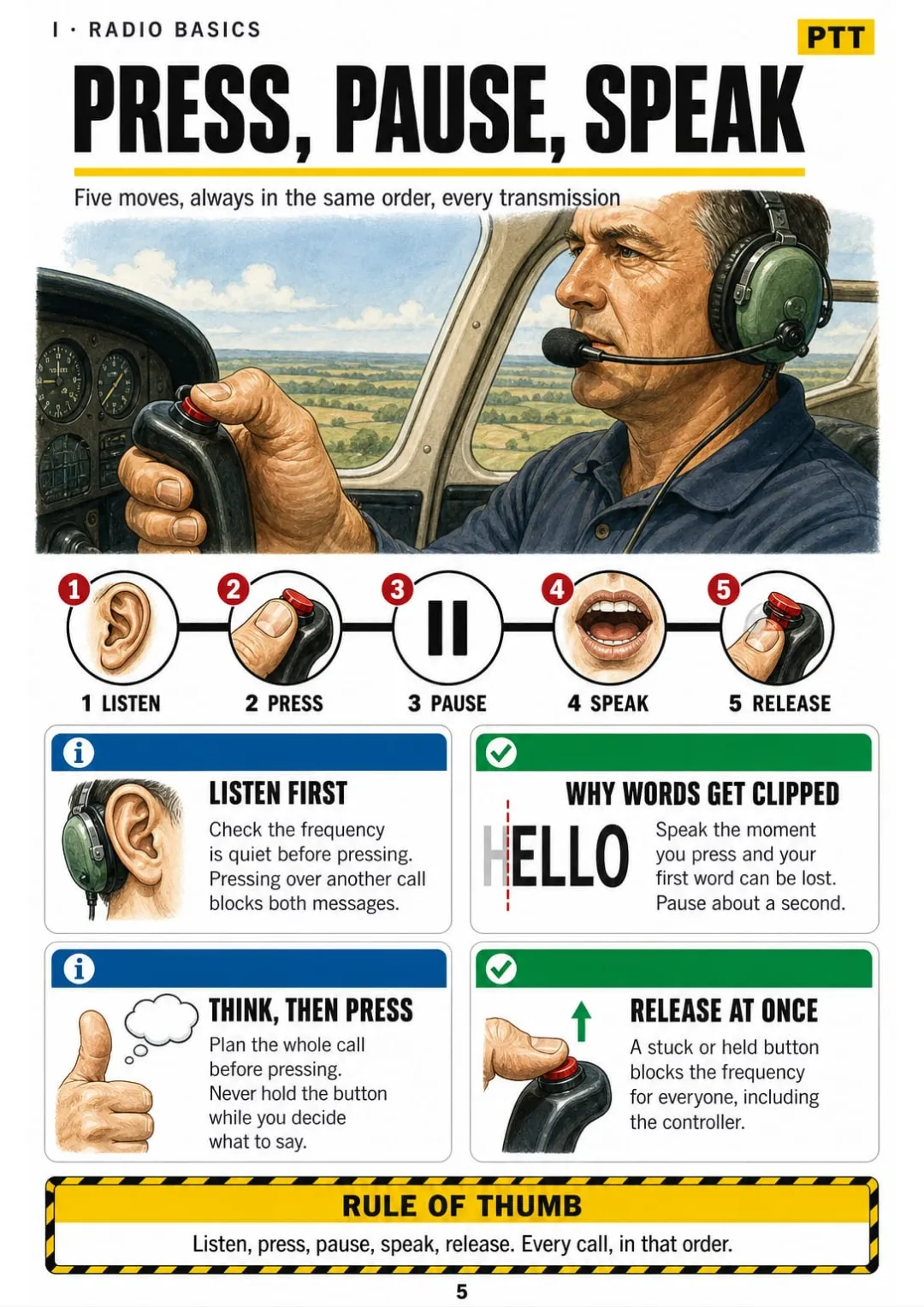
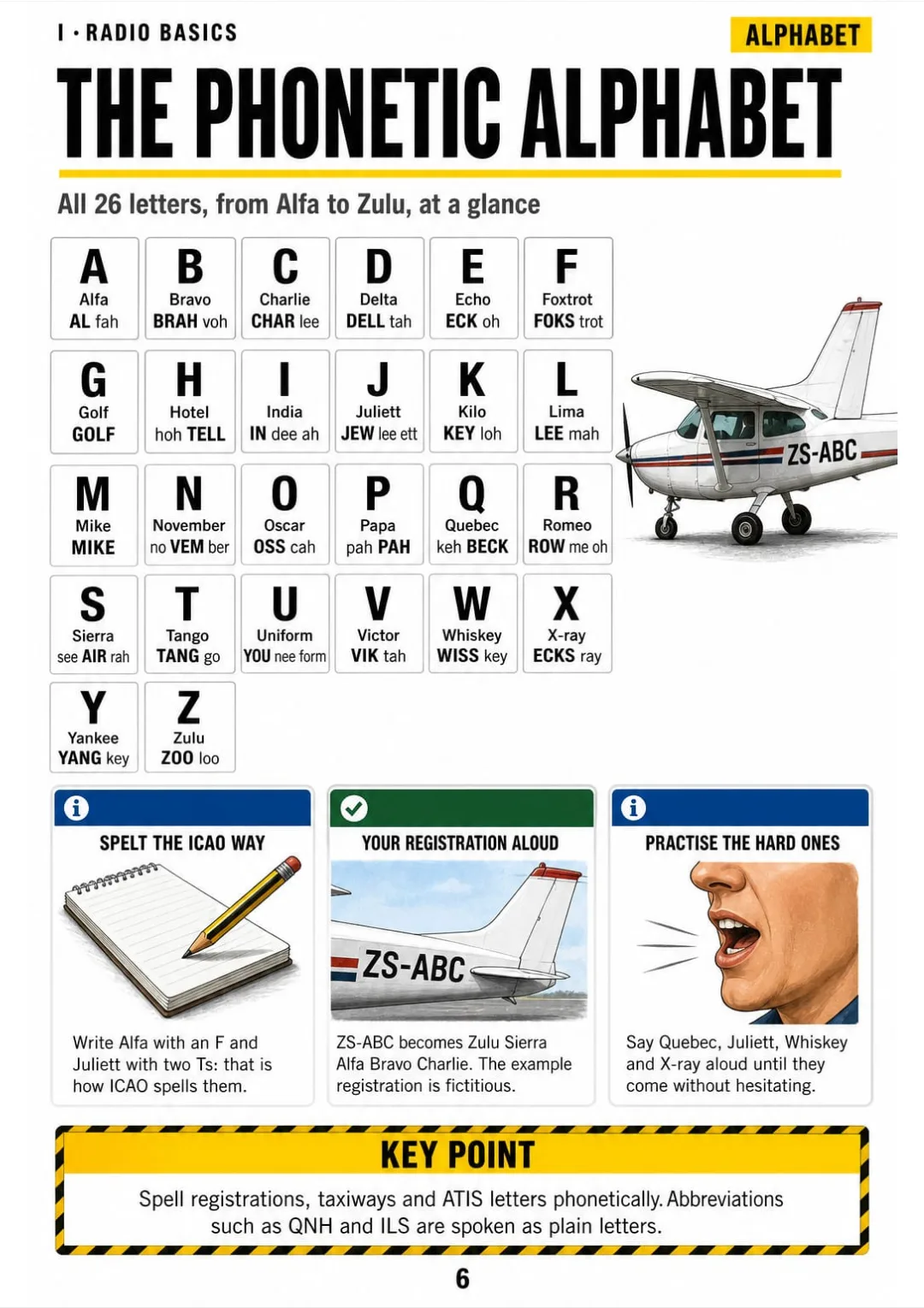
Every page has a big drawing and a box with the words, numbers and order you need to know:


Swipe to see more →
These are real pages from the book. The table of contents is the full one: 7 parts and 60 topics.
You're at the holding point with your thumb on the push-to-talk, and you have to call the tower. You know what you want. You just don't know what comes first. Your instructor is sitting right next to you.
The school manual explains call structure in paragraphs: addressee, identification, message, with exceptions in between. On the ground it makes sense. With the button pressed, it's gone.

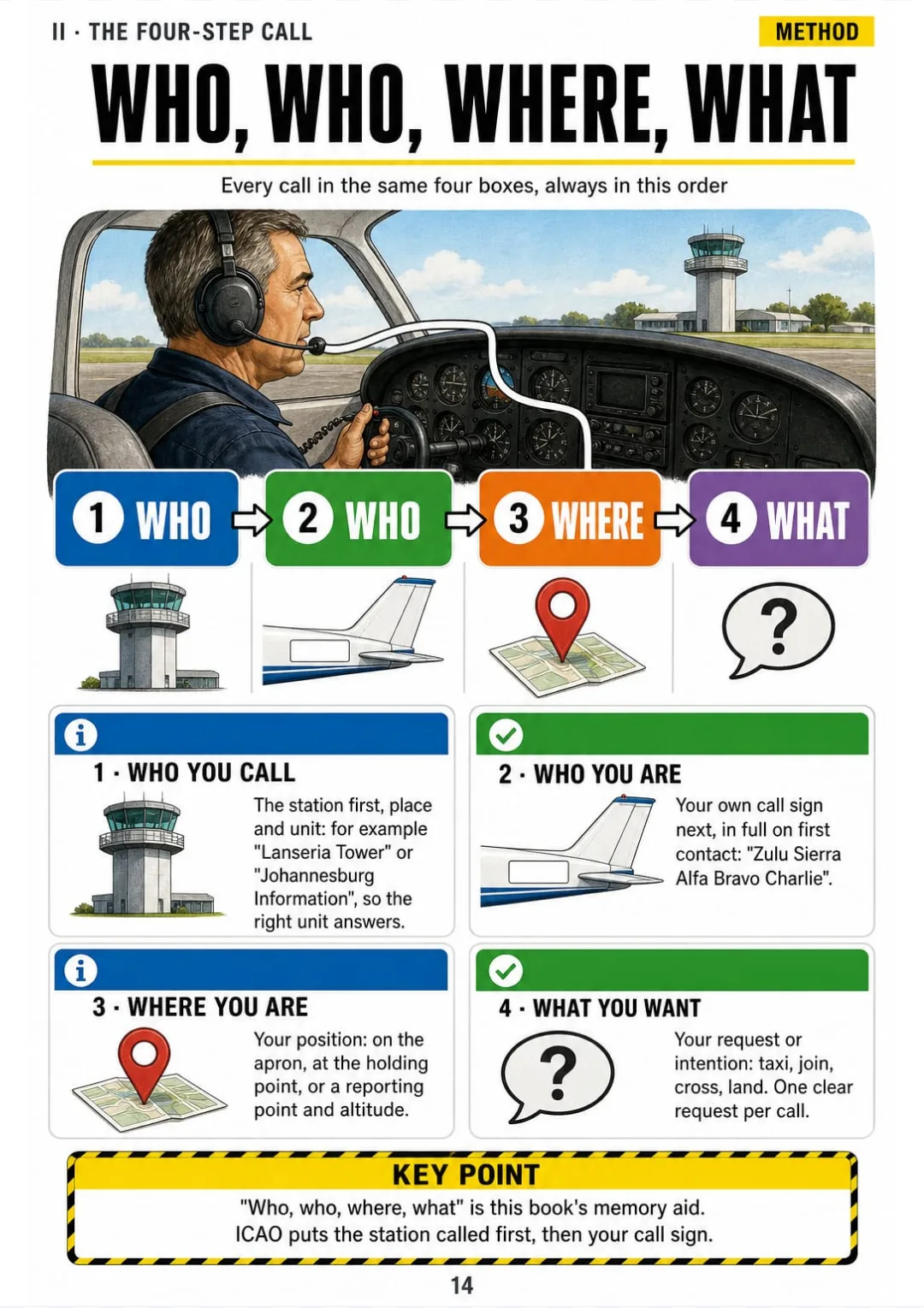
In this book the same call is four boxes in a row: who you're calling, who you are, where you are, what you want. Every example in the book follows those four boxes.
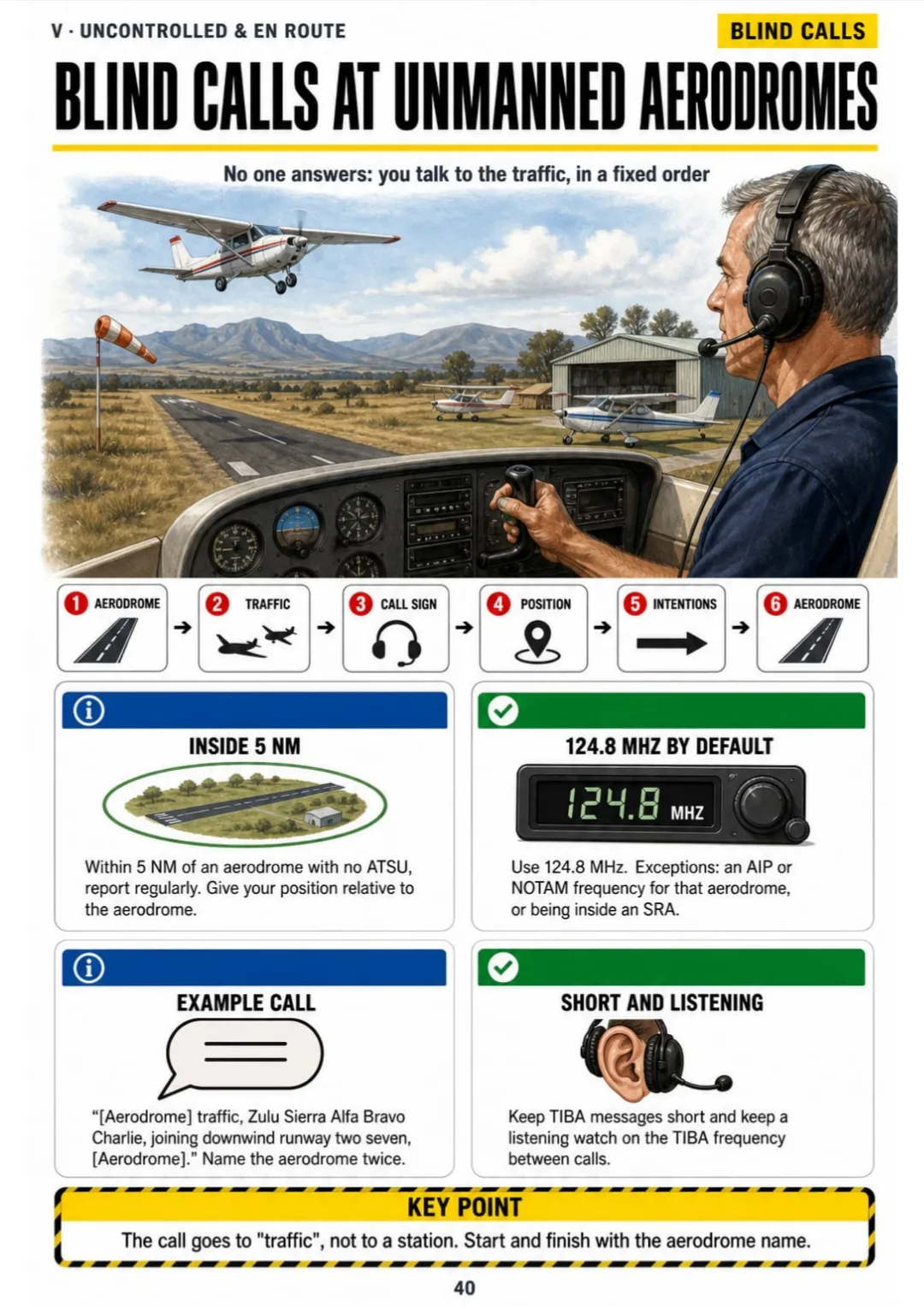
The radio check, the read-back, the downwind call, blind calls at an unmanned aerodrome and the MAYDAY each get their own page, built on the same order.
You see the order, you understand it and you make the call without going back to the manual. At the holding point, on downwind and in the oral test.

Radio basics, the four-step call, ground and departure, the circuit and landing, uncontrolled aerodromes and en route, emergencies and radio failure, and the exam and oral test: 64 pages, all illustrated
Think of it this way:
You're on downwind at a controlled aerodrome and the tower comes back with a clearance: number two, the runway, the QNH. You have a few seconds to read it back, in the right order.
In the book you open the read-back page and see that clearance drawn out: the items you must repeat marked in colour, and the ones you don't need to repeat left plain.

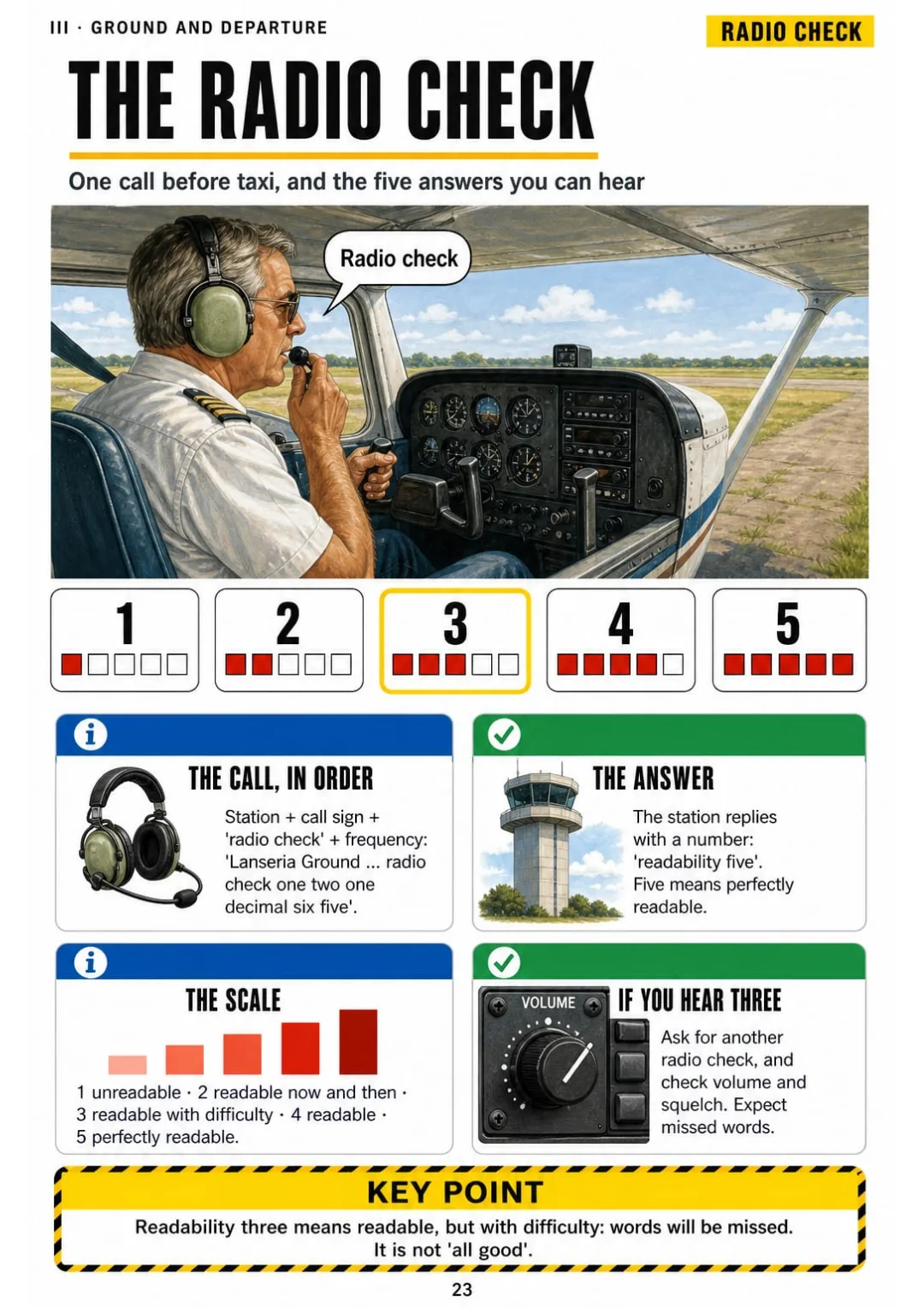
The same goes for the radio check, the circuit drawn from above, blind calls at an unmanned aerodrome, QNH and QFE, and the MAYDAY: each one on its own page.
Pilot Radiotelephony Illustrated is 7 parts and 60 topics, all drawn, and at the end a full flight in radio calls, the read-back traps and a one-page quick reference.
What you see drawn, you don't have to memorize.
The push-to-talk, the phonetic alphabet, numbers, altitudes and QNH out loud, UTC, the standard words, the readability scale and message priority.
Who, who, where, what: your call sign, which station to call, the first call, what you read back and what you don't, roger, wilco or read-back.
The radio check, the ATIS, requesting taxi, hold short, the holding point, line up and wait, take-off and changing frequency.
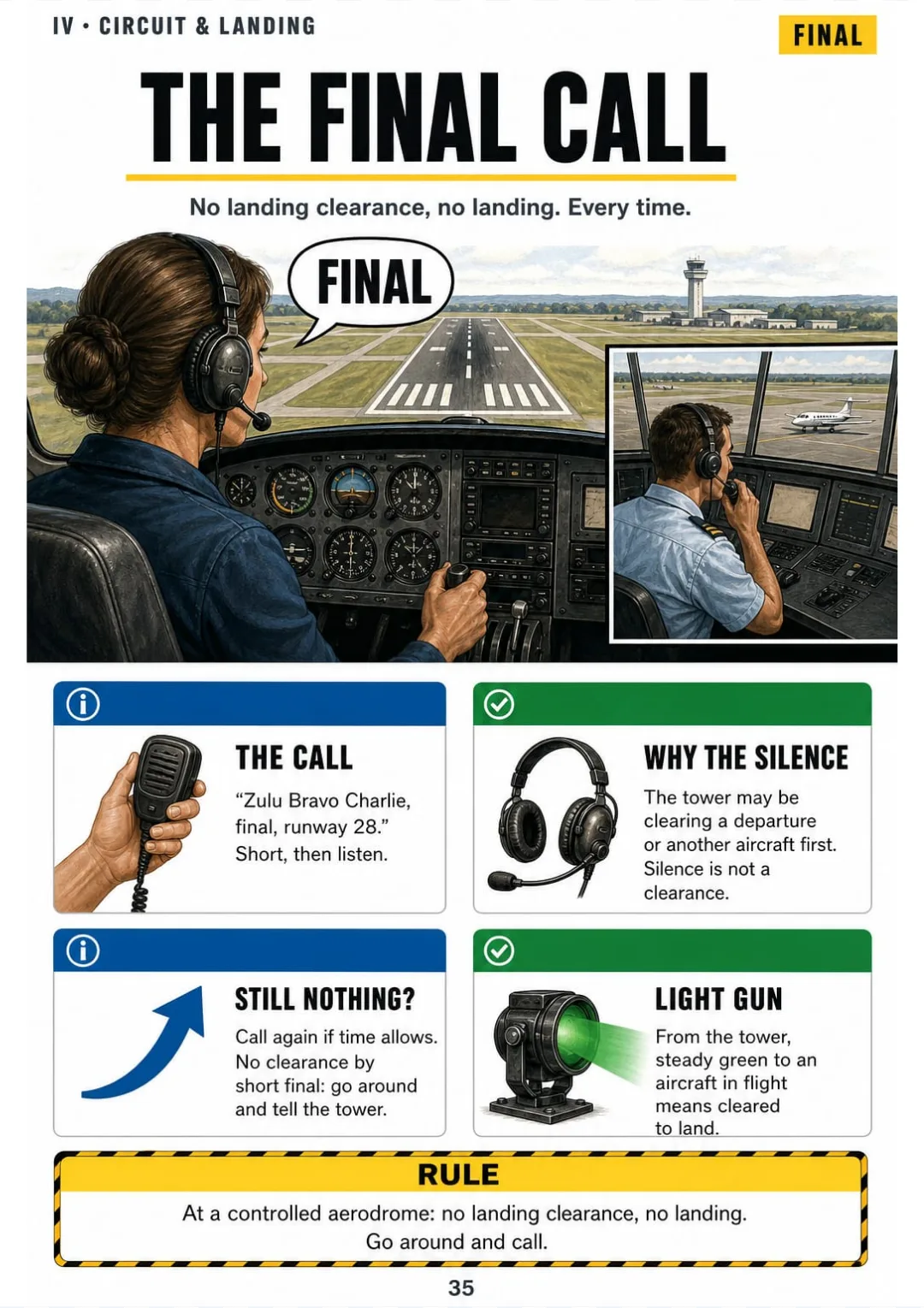
The circuit drawn from above, joining, the overhead join, downwind and final calls, landing clearance, going around and vacating the runway.
Blind calls, the general flying frequency, flight information, position reports, the transponder, QNH and QFE, and entering controlled airspace.
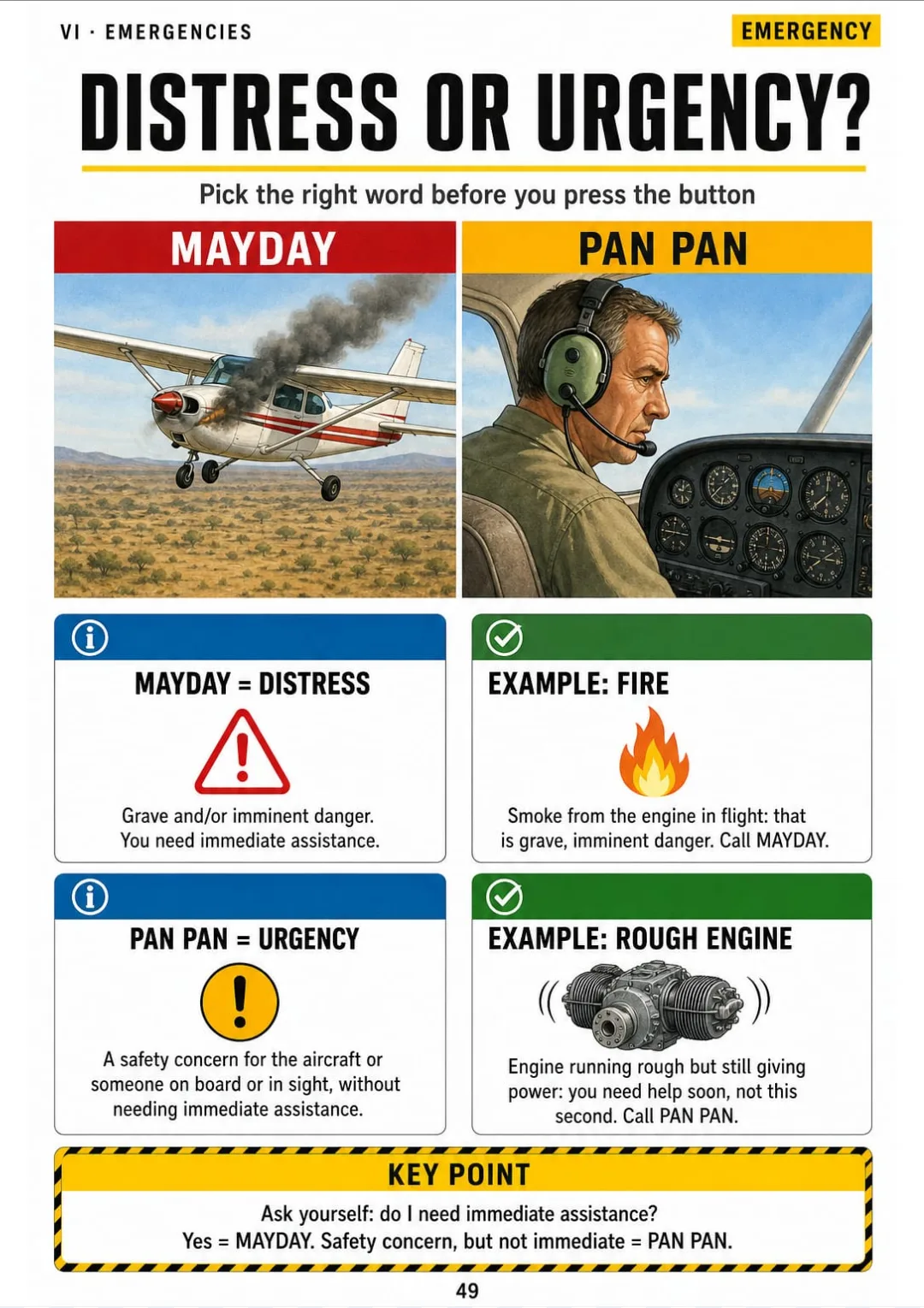
Distress or urgency, the MAYDAY in order, the PAN PAN, the emergency frequency, the special squawk codes, radio failure and light signals.
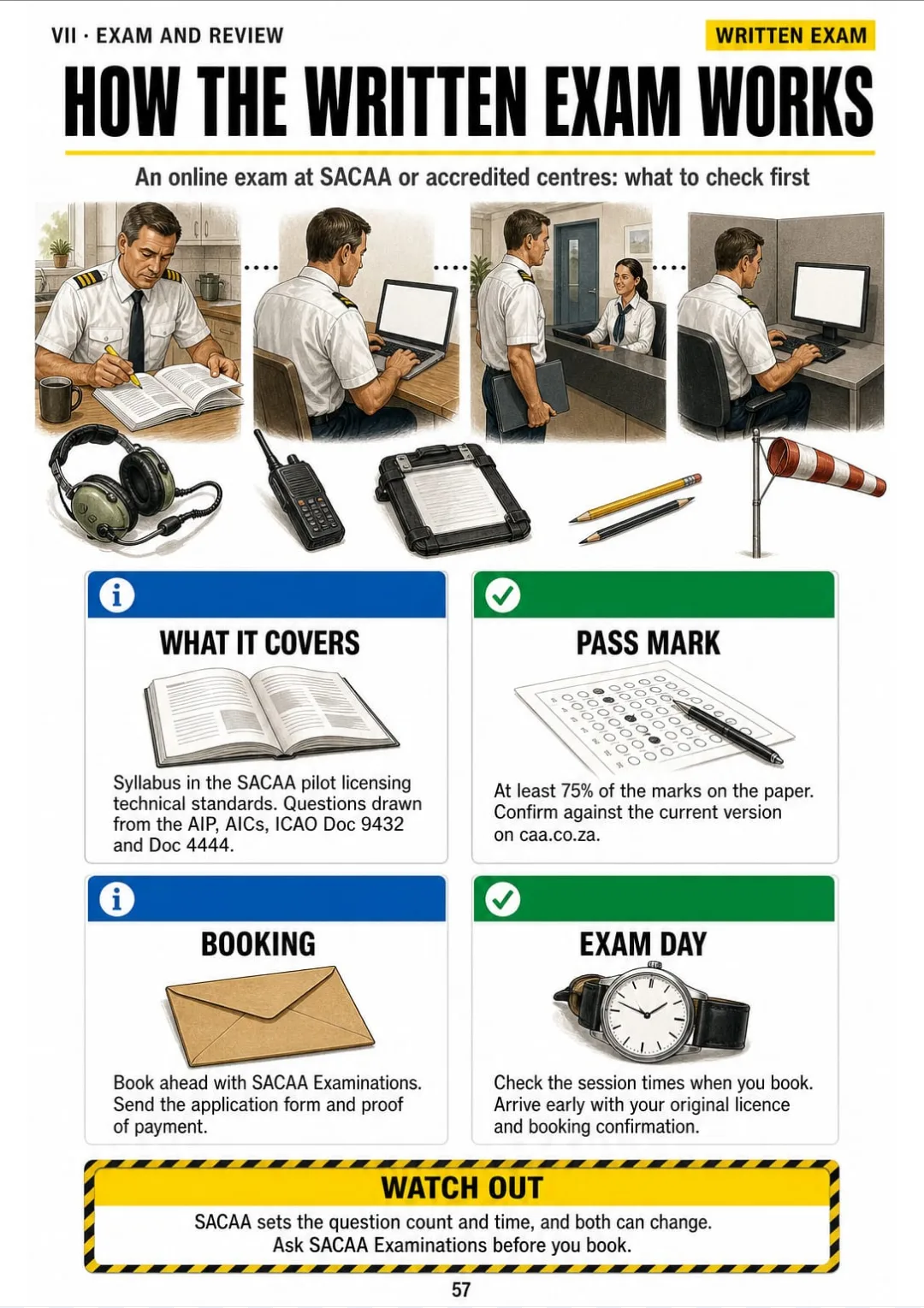
How the written exam works, what the examiner listens for, a full flight in radio calls, read-back traps and the one-page quick reference.
At the end of the book: A full flight in radio calls, read-back traps, a pre-flight radio checklist and a one-page quick reference.

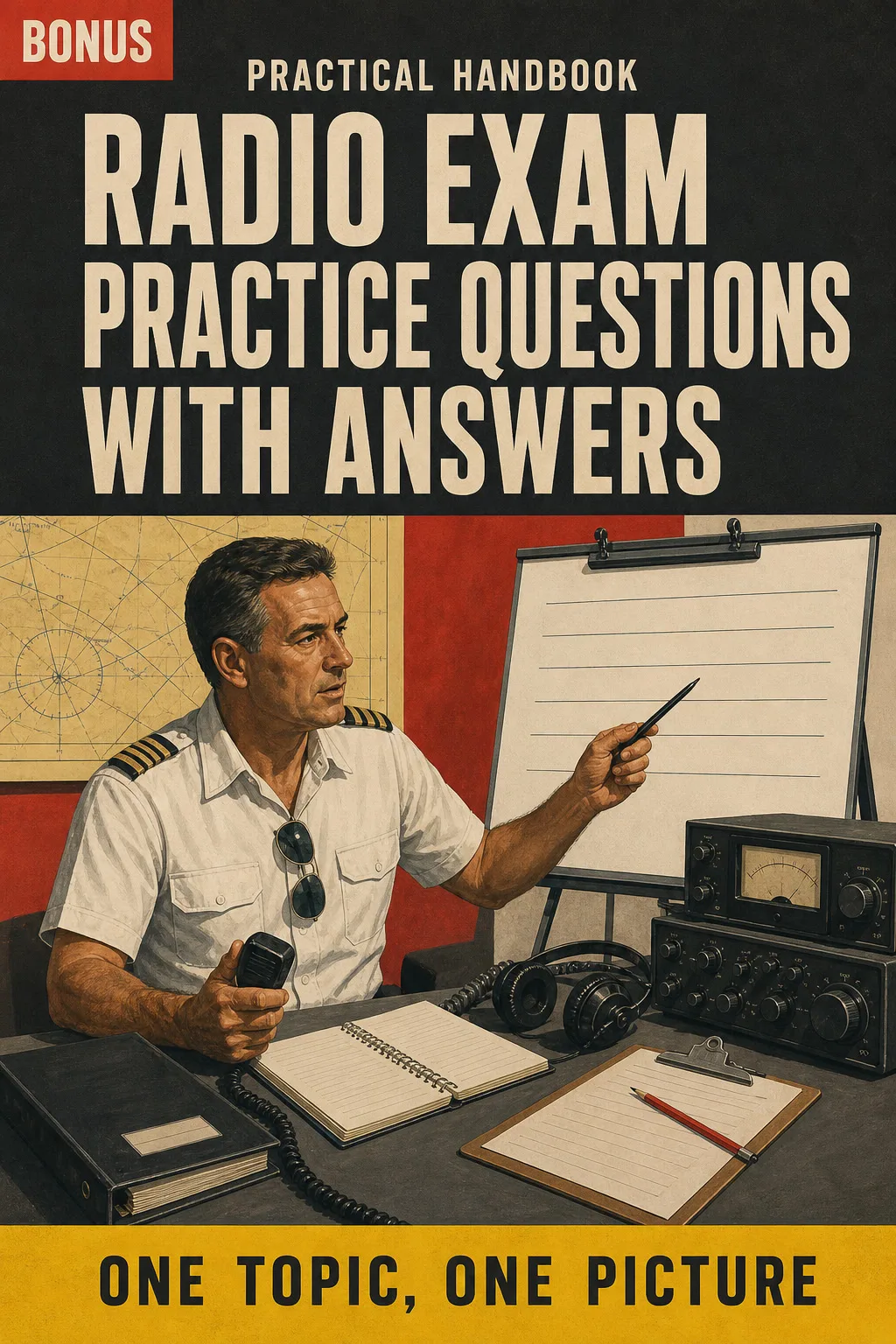
Exam-style questions on every topic, each answer explained, so you can test yourself before the written exam instead of just rereading.

Each frequent mistake shown next to the correct call, so you spot it in your own read-backs before the examiner does.
📄 This is a digital PDF book sent to your email: nothing is printed or shipped.
PDF by email: We email you Pilot Radiotelephony Illustrated as a PDF, together with the two free books. It's a single payment: no installments, no extra charges.
Every call you hear in the circuit has its own page, so you can follow the frequency instead of just hearing noise.
Read-backs, standard words, emergencies and radio failure on one page each, with practice questions to test yourself before the date.
The four-step order and the read-back rules to rehearse out loud, so you speak calmly with the tower and in the oral test.
📄 This is a digital PDF book sent to your email: nothing is printed or shipped.
Try Pilot Radiotelephony Illustrated for 30 days, bonus books included.
We refund everything if the file won't open, if the book isn't what you see here, if you were charged twice or if the email doesn't arrive. Just email us.
You pay once. No subscriptions.
Yes. It doesn't stop at the basics: every phase of the flight has its own page, from taxi to landing, with the calls and read-backs you use in the circuit. Apps have you repeat phrases; the book shows the order behind them, drawn, so you know what goes first when the tower talks fast.
From the South African Civil Aviation Regulations (Part 61) and the current syllabus for the restricted radiotelephony certificate, cross-checked with ICAO Annex 10 Volume II and the ICAO radiotelephony manual (Doc 9432). The examples are South African, not US or UK phraseology: ZS registrations, QNH in hectopascals, blind calls at unmanned aerodromes. Where local practice differs, your school and the current AIP come first.
No. It's independent study material and it doesn't give you a certificate: that comes from passing the written exam and the practical test. It is not affiliated with or endorsed by the SACAA or ICAO; they're named only to say which exam the book is for.
No. It helps you study and rehearse. Your instructor, your school and the current AIP come first, and the book is not an operational reference in flight.
No. They're written for this book, in the style of the topics in the syllabus, so you can test yourself. They're not official exam questions.
As a PDF by email, to the address you enter at checkout. The two bonus books come the same way.
No. It's a one-off payment, with no subscription.
Yes. The PDF prints well on A4 at home or at a print shop, so you can keep it in your flight bag.
You have 30 days. We refund everything if the file won't open, if the book isn't what you see on this page, if you were charged twice or if the email doesn't arrive: just email us.
No more rereading the manual with nothing sticking.
The four-step call: you see it drawn and that's it.
You get to the written exam and the oral test knowing where everything is.
Drawings make studying faster.
The book is right below.
One-time payment: US$ 27 · Guarantee: 30 days · PDF by email
YES, I WANT PILOT RADIOTELEPHONY ILLUSTRATED FOR US$ 27📄 This is a digital PDF book sent to your email: nothing is printed or shipped.